
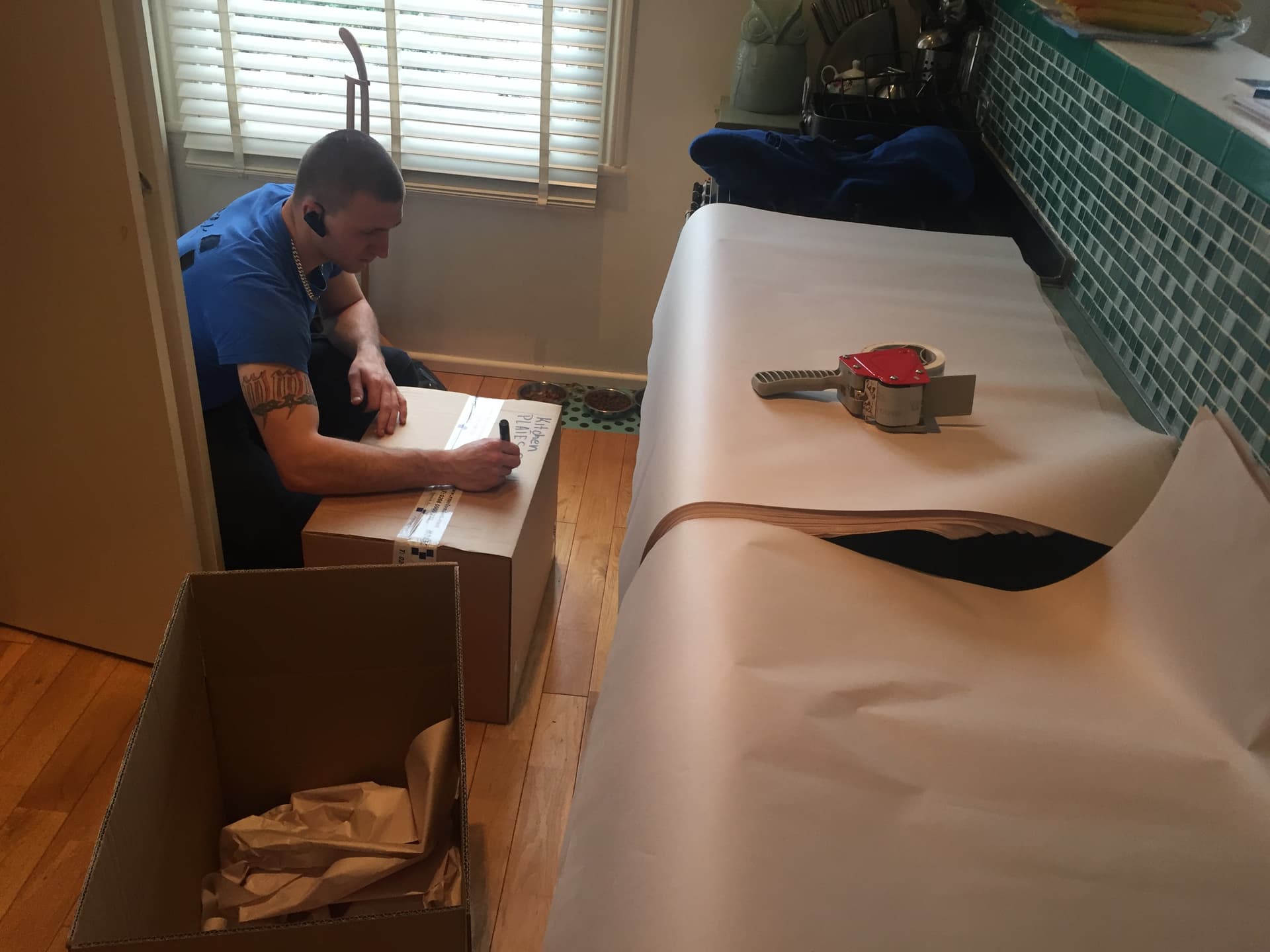
Start packing properly
Two weeks out the move stops being planning and becomes physical work. The house comes apart room by room, and there is a final round of people to tell.
If you are packing yourself, this is when the marathon starts. Work from the least used to the most: books, ornaments, out-of-season clothes, spare bedding, toys nobody has asked for in months. Leave the kitchen and the bathroom until the last few days, because you still have to live here.
Rules that make unpacking survivable:
- Label the side, not the top. Once boxes are stacked, top labels are invisible.
- Write two things on every box: what is inside, and which room it goes to in the new house. Not the room it came from.
- Small boxes for heavy things. Books in a large box become a box nobody can lift, and a split base at the worst moment.
- Fill the gaps. A half-empty box collapses when stacked. Towels and bedding make good padding.
- Keep a numbered list if you can face it. It is the only way to know afterwards whether anything is missing.
Some things should not go in the van at all. Removal firms cannot carry flammables, and that includes paint, aerosols, gas canisters, petrol for the mower and often nail varnish remover. Plants are usually excluded too, and frozen food certainly is. Ask your crew what their list covers rather than discovering it on the day.
Keep passports, jewellery, medication, cash and the paperwork for the move with you. Not in a box, not in the van.
Confirm everything with the removal firm
Call and check the details rather than assuming they are right.
- Arrival time and the expected duration
- The exact addresses, with postcodes, and a phone number they can reach you on
- Access at both ends: stairs, lifts, how far the van will be from the door
- Where the van can legally park, and whether a bay suspension is in place
- Anything needing dismantling, and whether they are doing it
- What you have packed yourself, since that usually affects insurance
Then arrange key collection with the estate agent or landlord, and confirm the time. A crew waiting outside a house nobody can open is the single most expensive way to spend a morning.
The last round of notifications
By now the utilities and council tax should be done. This fortnight covers everyone else.
Financial. Banks, credit cards, savings, investments, pensions, loans, life assurance, shares. Anything that posts you a statement or a card.
Doctor, dentist, optician. Notify them of the new address, or deregister if you are leaving the area, and ask for records to be transferred.
Royal Mail redirection. Set this up now if you have not. Royal Mail asks for at least five working days to process it, so leaving it until moving week is cutting it fine. The redirect only covers the names on the application, so list everyone in the household who needs their post forwarded.
Electoral register. Register to vote at the new address. It takes a few minutes and it affects your credit file as well as your right to vote. Worth knowing that photo ID is now required to vote in person at polling stations in Great Britain, so if you do not have an accepted form of ID, apply for a free Voter Authority Certificate in good time.
TV Licence. A licence covers an address rather than a person, and you need one to watch or record live TV on any channel or service, or to use BBC iPlayer. Update the address rather than cancelling, which you can do up to three months before you move. Watching without a valid licence carries a maximum fine of £1,000 plus costs.
Subscriptions and memberships. Gym, magazines, charity direct debits, loyalty schemes, food boxes, online retailers holding your default delivery address. The last one causes more misdirected parcels than anything else.
Regular deliveries. Anything that arrives on a schedule needs a stop date: veg boxes, milk if you still have it, prescriptions, pet food.
Friends and family. An email or a message costs nothing and reaches everyone. Save the cards for people who would appreciate one.
Run the house down
Empty the freezer. It needs defrosting before it moves, and frozen food does not travel. Plan the last fortnight's meals around what is in it.
Use up the cupboards rather than moving half-used bags of flour across London.
Sort the cleaning. Whether you are cleaning the old place yourself or paying someone, book it now for the day after you leave, when the rooms are empty.
Take the curtains down at the last moment if they are coming with you, and check what you agreed to leave behind.
Two weeks to go: the short version
- Start packing the least-used rooms, labelling the side of every box
- Ask the removal firm what they cannot carry
- Keep documents, jewellery and medication out of the van
- Confirm times, addresses, access and parking with the crew
- Arrange key collection and confirm the time
- Notify banks, doctor, dentist, optician and subscriptions
- Set up the Royal Mail redirection
- Register to vote and update the TV Licence
- Defrost the freezer and run down the cupboards
- Book cleaning for after you leave
Frequently asked questions
What can removal companies not transport? Flammable items are the main category: paint, aerosols, gas canisters, petrol and similar. Plants and frozen or perishable food are usually excluded too. Ask your firm for their list, since it varies.
How long before moving should I redirect my post? Royal Mail asks for at least five working days, and you can apply up to six months ahead. Everyone in the household who needs post forwarded must be named on the application.
Do I need to tell TV Licensing when I move? Yes. A licence covers the address, not the person, so update it rather than cancelling. You can do this up to three months before moving. Watching live TV or BBC iPlayer without a valid licence carries a maximum fine of £1,000 plus costs.
How should I label moving boxes? On the side rather than the top, with the contents and the room they should end up in at the new house. Colour coding by room speeds the unloading considerably.
What should I not pack in the removal van? Passports and documents, jewellery, medication, cash, keys and anything irreplaceable. Keep them with you, along with a first-night bag of essentials.
When should I defrost the freezer? A day or two before the move, once you have eaten what is in it. It needs to be empty, defrosted and dry before it travels.
Next steps
Our four weeks to go guide covers the utilities and insurance stage before this one, and the moving house checklist sets out the whole sequence through to arrival. For the jobs people forget in the first week, see the checklist movers forget.
RMV Storage & Removals has moved households across London for over fifteen years, with house and office removals, packing services and materials and container storage delivered to your door, across every area we cover. Get in touch whenever you need us.
Written by Riki Migliori, Director at RMV Storage & Removals. Originally published November 2014. Fully reviewed and updated summer 2026.