
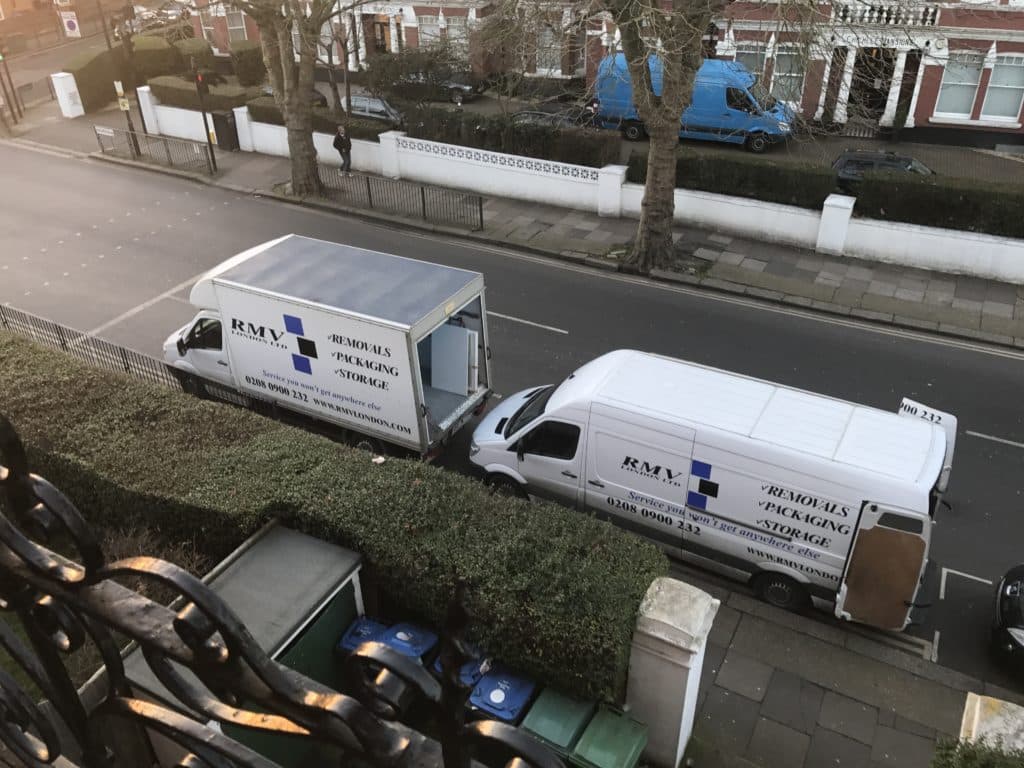
"White van man" is one of those British phrases that means two entirely different things depending on who is saying it. To the newspapers it is a caricature: a stereotype of a tradesman in a Transit, tailgating in the middle lane. To anyone actually moving a flat, it is simply the cheapest and quickest way to shift a load across town.
This piece deals with the second meaning. What the service actually is in the UK, when it is the right choice, when it is not, how it is priced, and the three checks that separate a legitimate operator from someone who will leave you uninsured.
What does "white van man" mean?
Literally, it describes a self-employed driver who owns a van, typically white because that is the standard colour vans are sold in, and who uses it to earn a living. That covers tradespeople, couriers, and the people who move furniture.
As a British idiom it carries a stereotype with it: a caricature of an aggressive, inconsiderate driver, usually assumed to be a self-employed tradesman. Worth stating plainly, since it is regularly misread: the "white" refers to the colour of the van, not the driver.
That cultural baggage has almost nothing to do with the service you are buying. In the removals industry the useful term is man and van: one driver with a vehicle, sometimes with a second person to help carry, hired by the hour to move goods from one place to another.
Where the phrase comes from
The Oxford English Dictionary's earliest evidence for "White Van Man" is from 1997, and the trail leads to a single week in May of that year.
On 18 May 1997 the Sunday Times ran an article by Jonathan Leake, then its transport editor, headlined "Number is up for White Van Man – scourge of the road". It opened by calling him the most feared driver on the road and reported that transport watchdogs planned to crack down on him. The following day the Express ran its own piece on the same theme.
Both were responding to a report by the Freight Transport Association, which had identified aggressive van driving as a road safety problem serious enough to warrant a national re-education programme. So the phrase entered the language through a genuine safety campaign rather than as a joke, which is a detail most retellings omit.
Attribution is contested. BBC Radio 2's Sarah Kennedy used it on air later in 1997 and has been credited with coining it, and there are suggestions the comedian Jo Brand used it earlier in the decade. What is documented is the print record: Sunday Times, May 1997.
The Sun later ran a regular White Van Man column, interviewing a different driver each time on the issues of the day, photographed leaning out of his cab. Sarah Kennedy was made honorary president of the First Ford Transit Owner's Club in 2005. The stereotype has since become a fixture of British political shorthand, invoked whenever anyone wants to gesture at a particular idea of working Britain.
Three decades on, it has aged badly as a description of the trade. The people driving vans for a living today include a substantial minority of women, and the work spans couriers, tradespeople and removals crews.
What a man and van service actually includes
A typical booking gets you a driver, a van, and labour for loading and unloading. Most operators will carry items down and up stairs, and many will help with basic dismantling, though that varies and should be agreed in advance.
What it usually does not include, unless you ask and pay for it: packing your belongings into boxes, supplying materials, wrapping furniture properly, or reassembly at the other end. Those are removals services rather than man and van services, and the distinction is where most disputes start.
When a man and van is the right choice
- A studio or one-bedroom flat, particularly with easy access
- A single room of furniture going into storage or to a relative
- A few large items that will not fit in a car
- A store collection, flat-pack furniture, a sofa bought secondhand
- A short local hop where the whole job takes under three hours
When it is the wrong choice
- A whole house. Hourly billing on a long job stops being economical, and one van means multiple trips
- Anything needing proper packing, since a rushed job with no materials is how things break
- Pianos, safes, antiques, artwork, or anything requiring specialist handling
- Moves with difficult access at both ends, or a tight completion-day window where a delay has consequences
- Any move where you need the certainty of a fixed price agreed after a survey
The honest test: if you would be upset by the contents arriving damaged, you want a removals company with the insurance to match.
How man and van pricing works
Almost always hourly, with a minimum charge, typically one or two hours. The clock usually starts when the van arrives and stops when the job is done, though some operators charge from their base.
Things that push the cost up, and are worth asking about before booking rather than discovering after:
- Crew size. One person or two. A second pair of hands often costs less than the extra hours a solo driver needs.
- Access. Stairs, no lift, a long carry from the parking spot to the door.
- Parking. Controlled parking zones may need a bay suspension arranged in advance.
- Congestion Charge and ULEZ. Relevant across much of London and normally passed on.
- Waiting time. If you are not ready when the van arrives, you are usually paying for it.
The three checks that actually matter
This is the part most people skip, and it is the difference between a professional operator and a man with a van and nothing else.
Hire and reward insurance. Carrying other people's goods for payment requires a specific class of van insurance. Standard "social, domestic and pleasure" cover, and even ordinary business-use cover, does not permit paid haulage, and using a vehicle for it anyway invalidates the policy. If there is an accident on the way, the insurer can refuse to pay and nobody is covered. Ask directly and ask to see the certificate, checking it covers the date of your move. A legitimate operator will produce it without hesitation.
Goods in Transit insurance. Hire and reward covers the vehicle. It does not cover your belongings inside it. Goods in Transit is the separate policy that does, and you should ask what the limit is and what is excluded. Items packed by the customer are commonly excluded.
A waste carrier licence, if anything is being taken away. If you are also asking them to remove rubbish, old furniture or a mattress, they need to be registered with the Environment Agency as a waste carrier, and you can check the public register yourself. Unlicensed disposal is fly-tipping, and the liability for waste dumped illegally can follow back to the household it came from.
Man and van versus a removals company
Man and van
- Typical job: a single room, a small flat, a few items
- Pricing: hourly, with a minimum charge
- Packing: rarely included
- Survey: usually none
- Insurance: ask, and verify it yourself
- Best for: speed and cost on small loads
Removals company
- Typical job: a whole property
- Pricing: based on volume and access, after a survey
- Packing: available as a service, with materials supplied
- Survey: standard for anything sizeable
- Insurance: Goods in Transit and warehouse-keeper cover as standard
- Best for: certainty on large or complex moves
Neither is better in the abstract. A removals crew for two armchairs is overkill; a lone van for a four-bedroom house is a false economy that turns into a very long day.
Frequently asked questions
What does "white van man" mean? Literally, a self-employed driver who works from a van. In Britain the phrase also carries a media stereotype dating from the 1990s press. In the removals trade the practical term is "man and van", meaning a driver with a vehicle hired by the hour to move goods.
Is a man and van cheaper than a removals company? For small loads, usually yes, because you pay by the hour for one vehicle and one or two people. For a whole house it is often more expensive once multiple trips and a long hourly job are counted, and it comes without packing, survey or the same insurance cover.
What insurance should a man and van have? Hire and reward insurance on the vehicle, which is legally required to carry other people's goods for payment, and Goods in Transit insurance to cover the belongings themselves. Ask to see both, and check the dates.
Can a man and van take away rubbish? Only if registered as a waste carrier with the Environment Agency. If waste is dumped illegally, liability can trace back to the household that produced it, so ask for the registration before handing anything over.
How long does a man and van booking take? Most operators set a minimum of one or two hours and charge in increments after that. A studio flat with good access might take two to three hours; stairs, distance and volume all extend it.
Do I need to help with the loading? Not usually, but confirm it. Some cheaper quotes assume the customer is carrying alongside the driver, which is a materially different service from one where the crew does the work.
How we can help
RMV Storage & Removals has worked across London for over fifteen years, and we run both ends of this: house and office removals for whole properties, and man and van work for smaller jobs, with packing services and materials and container storage delivered to your door when they are needed. You can see every area we cover, including the locations where we run a dedicated man and van service.
If you are not sure which service your move needs, our guide to removals terms explains the differences, how a man and van booking works covers pricing and van sizes, and the moving house checklist covers the full sequence. Otherwise get in touch and we will tell you honestly which one you need.
Written by Riki Migliori, Director at RMV Storage & Removals. Originally published March 2014. Fully reviewed and updated summer 2026.