
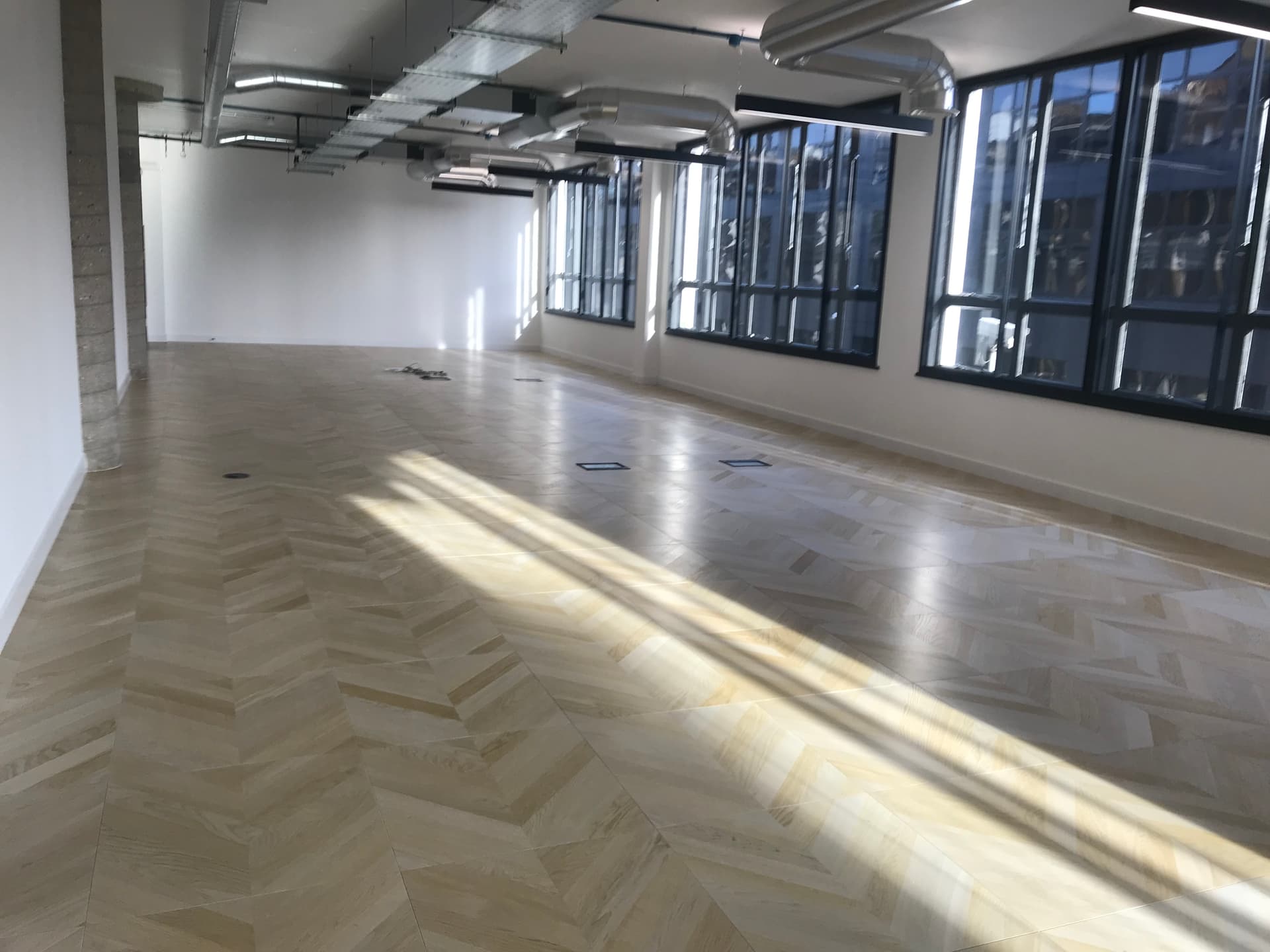
Most businesses choose a cleaning company the same way: search, ring the first three results, take the cheapest quote. Then six months later they are on their third contractor, wondering why nothing ever gets done properly.
The problem is rarely the cleaners themselves. It is that nobody defined what "clean" meant before signing, and nobody checked whether the company was legitimate. Both are fixable in an afternoon.
Here is how to choose properly.
Work out what you actually need first
You cannot compare quotes until every company is pricing the same job. Before contacting anyone, write down:
- Floor area and layout. Square footage, number of floors, how many desks, whether there is a lift.
- Rooms with special requirements. Kitchens, toilets, a server room nobody should be spraying anything near, meeting rooms with particular flooring.
- Frequency. Daily, three times a week, weekly. Toilets and kitchens usually need more attention than desk areas.
- Hours. Before opening, after closing, or during the day. Out-of-hours costs more but avoids disruption, and raises questions about keys and alarms.
- What is included. Vacuuming, surfaces, bins, toilets, kitchen, glass, floors. Then the periodic items: carpet cleaning, internal windows, high-level dusting, upholstery.
- Consumables. Who supplies and pays for hand soap, paper towels, toilet roll, bin liners. This is a genuine cost and it is routinely left ambiguous.
That list becomes your specification. Send the same one to every company you approach.
Get three quotes, and make them comparable
Three is the right number. Fewer and you have no reference point; more and you are managing a procurement exercise for a job that does not warrant one.
Do not simply take whoever ranks first in a search. Look further down the results, ask other businesses in your building who they use, and check reviews that mention reliability over months rather than a single visit.
Insist on a site visit. Any company quoting for a full office without seeing it is guessing, and the price will change once they discover the reality. During the visit, ask how many hours they are allocating and how many staff. That single number tells you more than the headline price: two hours of one person's time cannot clean what four hours can, whatever the quote says it covers.
Check they are legitimate
This is the part that separates a real contractor from someone with a van and a mop, and almost nobody asks.
Employers' liability insurance. Any business with employees must hold it by law under the Employers' Liability (Compulsory Insurance) Act 1969, with a minimum of £5 million of cover from an authorised insurer. Ask to see the certificate. The Health and Safety Executive sets out the requirement, and businesses can be fined up to £2,500 for each day they operate without it.
Public liability insurance. Not legally compulsory, but essential here. Cleaners work unsupervised around your equipment, and you want cover if a floor buffer goes through a glass partition or a wet floor causes an injury.
Employment status of the cleaners. Ask whether they are employed or subcontracted, and whether right-to-work checks are carried out. If the price is far below everyone else's, the arithmetic usually comes out of somebody's wages.
Vetting. Cleaners are alone in your premises with computers, files and keys. Ask what background checking is done and what the key-holding and alarm procedure is.
COSHH. Cleaning chemicals fall under the Control of Substances Hazardous to Health regulations. A professional contractor will have assessments and trained staff. An amateur will look blank.
Waste. If they remove anything beyond your normal bins, they need to be registered as a waste carrier. Your business also has a legal duty of care for its waste, so responsibility does not simply transfer to whoever loads the van.
Read the contract before you sign it
- Notice period. Three months is common and is a long time to be stuck with a service that is not working. Ask for one month, or a probationary period.
- Cover for absence. What happens when your regular cleaner is ill or on holiday? A company that cannot answer this will simply not turn up.
- Who supervises. Is anyone checking the work, or is it entirely on you to notice and complain?
- Reporting problems. A named contact and a response time, not a general enquiries address.
- Price reviews. When can they increase it, and by how much.
Judge it after a month, not a week
Any cleaning company performs well for the first fortnight. The question is what happens in week six.
Reasonable things to check: are bins emptied every visit, or only mostly? Are the corners, skirting boards and behind the doors done, or just the middle of the floor? Do the toilets get properly cleaned or just wiped? Is anyone telling you when the soap runs out, or waiting for you to notice?
Give feedback early and specifically. Most problems are a misunderstanding about scope rather than laziness, and a good contractor fixes them the same week.
When a one-off clean is what you need
Regular contract cleaning is not always the answer. Sometimes the requirement is a single deep clean: after building work, at the end of a lease, before a landlord's inspection, or once a space has been emptied.
These are different jobs with different equipment, and often better suited to a specialist than to your regular contractor. After-builders cleaning in particular involves fine dust that ordinary vacuuming spreads rather than removes, and it usually needs repeating a few days later once the remaining dust has settled.
Frequently asked questions
How much does office cleaning cost in the UK? It depends on floor area, frequency and what is included, and it is normally quoted per hour or per visit. Compare quotes on the hours and staff allocated rather than the headline figure, since two companies quoting the same price may be allocating very different amounts of time.
What insurance should an office cleaning company have? Employers' liability insurance is a legal requirement for any company with employees, with a minimum of £5 million cover. Public liability is not compulsory but you should insist on it. Ask to see both certificates.
Should cleaning happen during or outside office hours? Outside hours avoids disruption and is what most offices choose, but it means handing over keys and alarm codes, so agree the security procedure in writing. Daytime cleaning costs less and suits smaller offices where the disruption is minimal.
Who pays for consumables like soap and paper towels? Whichever you agree, so long as it is written down. Some contracts include them, some bill separately, and some leave it to you. It is one of the most common sources of dispute.
How long should an office cleaning contract be? Aim for a short notice period, ideally a month, or a trial period before committing. Three-month notice terms are common but leave you tied to a service that may not be working.
Do I need a special clean after building work? Usually, yes. After-builders cleaning deals with fine dust that settles into every surface and often needs a second visit a few days later. It is a different job from routine office cleaning.
Talk to us
RMV Storage & Removals works with businesses across London on office removals, professional and after-builders cleaning, packing materials and container storage delivered to your premises, across every area we cover.
If you are clearing a space before a clean, our guide to an office clear-out covers what you must keep, what to archive and how to dispose of the rest. For the domestic side, including why cleaning causes more deposit disputes than anything else, see our short history of the vacuum cleaner. Otherwise get in touch and we will talk it through.
Written by Riki Migliori, Director at RMV Storage & Removals. Originally published June 2014. Fully reviewed and updated summer 2026.