
Never stack comics flat
Almost everything that damages a comic collection in a move comes from one mistake: treating comics like books and laying them in a pile.
Stacked flat, the issues at the bottom compress under the weight above them. Spines bend, covers rub together every time the pile is shuffled, and on a warm day glossy covers can stick to one another. Tying a stack with string or rope, which older advice sometimes suggests, adds pressure lines across the cover that never come out.
Comics travel and store the same way they should live: upright, like files in a drawer.
If your collection is worth anything at all, the rest of this guide is worth twenty minutes of your time. Condition is nearly everything in comic value, and the drop from one grade to the next takes real money with it.
Bag and board first
Three layers protect a comic: the bag, the board, and the box.
Bags. Polypropylene or polyethylene sleeves are fine for the bulk of a collection. Mylar is more expensive and worth it for key issues, since it is more durable and far less permeable. Buy the right size for the era: modern, Silver Age and Golden Age comics are different dimensions, and a bag that is too large lets the comic shift.
Boards. An acid-free backing board goes behind the comic inside the bag. It keeps the issue rigid, prevents creasing when you flip through a box, and buffers the paper. The board should be slightly smaller than the bag.
Boxes. Purpose-made comic boxes are dimensioned for upright storage. A short box holds roughly 150 to 175 issues; a long box takes 250 to 300 but becomes genuinely heavy and awkward when full. For a move, short boxes are the better choice: easier to lift, less likely to fail, and less painful if one is dropped.
Plastic archival boxes cost more than cardboard and resist moisture and pests better, which matters if the collection is going into storage rather than straight into a new house.
Packing for the move itself
Fill boxes properly. A box that is too full makes issues hard to remove without tearing bags; one that is too empty lets them lean and curl. If a box is part-full, put a filler board or a piece of stiff card at the end to keep everything upright.
Alternate the direction of every few issues, front-to-back, so the spines do not all build up on one side and skew the stack.
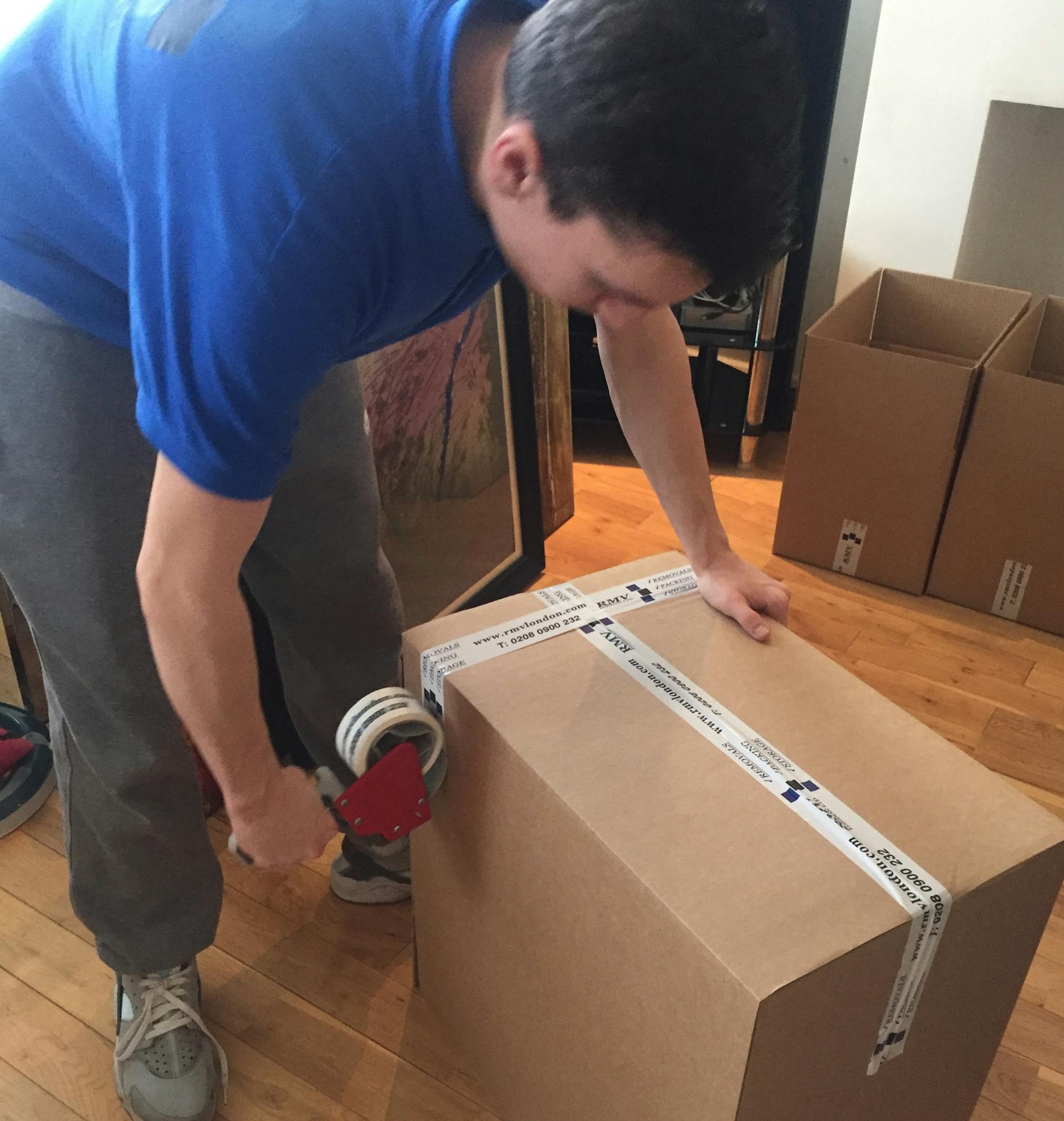
Tape the box shut, including the handle holes on long boxes, and label the top and the side.
Never stack anything on top. Comic boxes go on top of the load or in their own layer, never under furniture or heavy cartons.
Keep them dry. Cardboard boxes wick water from a wet pavement in seconds. On a rainy moving day, they go straight from door to van.
Handle by the edges, and keep the eating and drinking somewhere else while you pack.
The high-value question
Here is the part a removals company should tell you honestly: if a comic is worth serious money, it should not go in the van.
Goods in Transit insurance frequently excludes items packed by the customer and often caps or excludes collectibles, cash-equivalent items and anything of unusual value unless it has been declared and specifically covered. That means a rare issue damaged in transit may not be claimable at all.
Three sensible steps:
- Declare high-value items to your removal firm in advance and ask directly how they are covered. Get the answer in writing.
- Get valuations for anything significant, and photograph the collection before it moves. Photograph graded slabs including the label.
- Carry the key issues yourself, in your car or in a bag that stays with you, along with the passports and jewellery.
Graded comics in CGC or CBCS slabs need their own handling. The rigid cases do not fit standard comic boxes, they crack under pressure, and a cracked slab means regrading. Pack them in the original clamshell or a purpose-made slab box, padded, upright, and carried rather than loaded.
If the collection is going into storage
Paper has three enemies: heat, moisture and light.
- Stable and cool beats cold. Roughly 16 to 21°C is the target, but stability matters as much as the number. Repeated swings make paper expand and contract, which produces permanent waves in covers.
- Humidity around 40 to 50%. Damp brings mould and foxing; very dry air makes paper brittle.
- No sunlight at all. Cover inks fade in months, not years, and even indirect light does it.
- Off the floor, on a pallet or shelf, with nothing stacked on top.
- Check periodically. Mould and yellowing progress unnoticed in a box nobody opens.
Attics, garages and sheds are the worst places in any property for exactly these reasons, and they are where most collections end up. Our container storage is dry, clean and ventilated, which is a considerable improvement on a loft, but for a genuinely valuable collection ask specifically about the conditions before committing rather than assuming.
Frequently asked questions
How should comic books be stored? Upright, like files in a drawer, each one in an acid-free bag with a backing board, in a purpose-made comic box kept cool, dry and out of sunlight. Never stack them flat for any length of time.
Should I use Mylar bags or polypropylene? Polypropylene or polyethylene is fine for most of a collection. Mylar is more durable and less permeable, and is worth the extra cost for key issues and anything of significant value.
How many comics fit in a comic box? A short box holds roughly 150 to 175 issues and a long box 250 to 300. Short boxes are easier and safer to move, which matters more than capacity when relocating.
What temperature and humidity suit comic storage? Around 16 to 21°C and 40 to 50% relative humidity, with stability mattering as much as the exact figures. Fluctuation causes cockling and warping over time.
Are comics covered by removals insurance? Often not fully. Goods in Transit policies commonly exclude self-packed items and limit cover for collectibles unless declared in advance. Ask your firm in writing and carry the most valuable issues yourself.
How do I move graded or slabbed comics? In their original clamshell or a purpose-made slab box, padded and upright. Slabs crack under pressure and do not fit standard comic boxes, and a cracked case means paying to have the comic regraded.
How we can help
RMV Storage & Removals has moved households and collections across London for over fifteen years, with house and office removals, packing materials delivered to your door and container storage, across every area we cover.
For the wider packing job, see our practical packing guide, and for the timeline the moving house checklist. If you are moving something unusual or valuable, get in touch and tell us what it is before the day.
Written by Riki Migliori, Director at RMV Storage & Removals. Originally published July 2015. Fully reviewed and updated summer 2026.