
What survives storage, and what does not
Storage itself does not damage belongings. Poor preparation does, and the damage shows up months later when a container is opened and something smells, or has bloomed, or has been eaten.
Almost all of it is preventable in an afternoon. Here is what actually matters, in the order you would do it.
Clean and dry everything first
The single most important rule. Anything stored damp will develop mould, and anything stored with food residue attracts insects.
- Upholstery, rugs and mattresses must be completely dry before they are covered. Cleaned on Tuesday and stored on Wednesday is not dry.
- Kitchen equipment should be washed and dried, including the bits people skip such as toaster crumb trays.
- Garden furniture and tools need soil and moisture removed, since damp timber and metal both deteriorate quickly in a sealed container.
- Textiles and wool should be cleaned before storage, because moth larvae are attracted to natural fibres and to the traces left on them.
Appliances need their own preparation
Fridges and freezers. Defrost completely, then wash and dry the interior. A sealed appliance with any moisture inside will smell within weeks and may never recover. Wedge the door very slightly open with a cloth or a piece of foam if you can, and store upright.
Washing machines and dishwashers. Drain fully, including the hoses, and leave to dry. Refit transit bolts to a washing machine if you still have them, since an unsecured drum can damage its bearings in transit.
Anything with a fuel tank, such as a mower or a strimmer, cannot go into storage with fuel in it. Fuel is flammable and excluded.
Batteries out. Remove them from remote controls, toys, torches and tools. Leaking batteries ruin whatever they are sitting in.
Dismantle what comes apart
Space is the cost, so flat is cheaper than assembled.
Beds, tables, wardrobes and shelving are the obvious candidates. Keep every screw, bolt and fitting in a labelled freezer bag taped to the underside of the item it came from, and photograph the assembly before you take it apart if it is at all complicated.
Two cautions. Flat pack furniture does not always survive a second dismantling, so weigh whether it is worth storing at all. And genuinely old furniture is better left alone, since original joints are not designed to come apart. Our guide to moving and storing antiques covers that.
Wrap it properly, and never in sealed plastic
The commonest mistake in storage is wrapping furniture tightly in polythene. It traps moisture against the surface, which causes bloom on polished wood, mildew on fabric and rust on metal.
Use breathable materials instead:
- Mattress and sofa covers designed for the purpose
- Cotton sheeting or purpose made covers over polished furniture
- Acid free tissue against anything polished, painted or gilded
- Bubble wrap over a blanket layer, not directly against wood
- Uniform boxes rather than a mix, because they stack and nothing collapses
Boxes should be full but not bulging, taped along the base seam and both ends, and labelled on the sides rather than the top.
Guard against moths and pests
Worth its own section, because it is the damage people least expect.
Moth larvae eat protein fibres, meaning wool, silk, cashmere, feather and fur. A stored wool rug or a box of jumpers is close to ideal habitat if it goes in dirty.
Clean everything natural fibred before storage, use sealed containers or garment bags for the most valuable items, and add cedar or a moth deterrent. Never store food, not even sealed food, and check nothing has been left in a coat pocket.
Think about the electronics and the paper
Electronics prefer stable conditions. Remove batteries, coil and label cables, and keep original boxes if you have them. Screens travel and store upright, on edge.
Books and paper are heavy and vulnerable to damp. Small boxes only, packed flat rather than spine down, and never stored directly on a floor.
Photographs and documents benefit from being boxed together and kept away from any exterior wall.
Load the container so you can live with it
How things go in decides how usable the storage is later.
- Heavy at the bottom, light on top, weight spread evenly rather than all at one end.
- Furniture upright where possible, using its own footprint.
- Fragile boxes on top, never underneath anything.
- Nothing leaning against polished surfaces.
- Label boxes facing outwards so they can be read without moving anything.
- Load last what you might need first. If there is any chance of wanting something during the storage period, it belongs at the door end.
- Keep an inventory and note which container holds what, as covered in our guide to making a removal inventory.
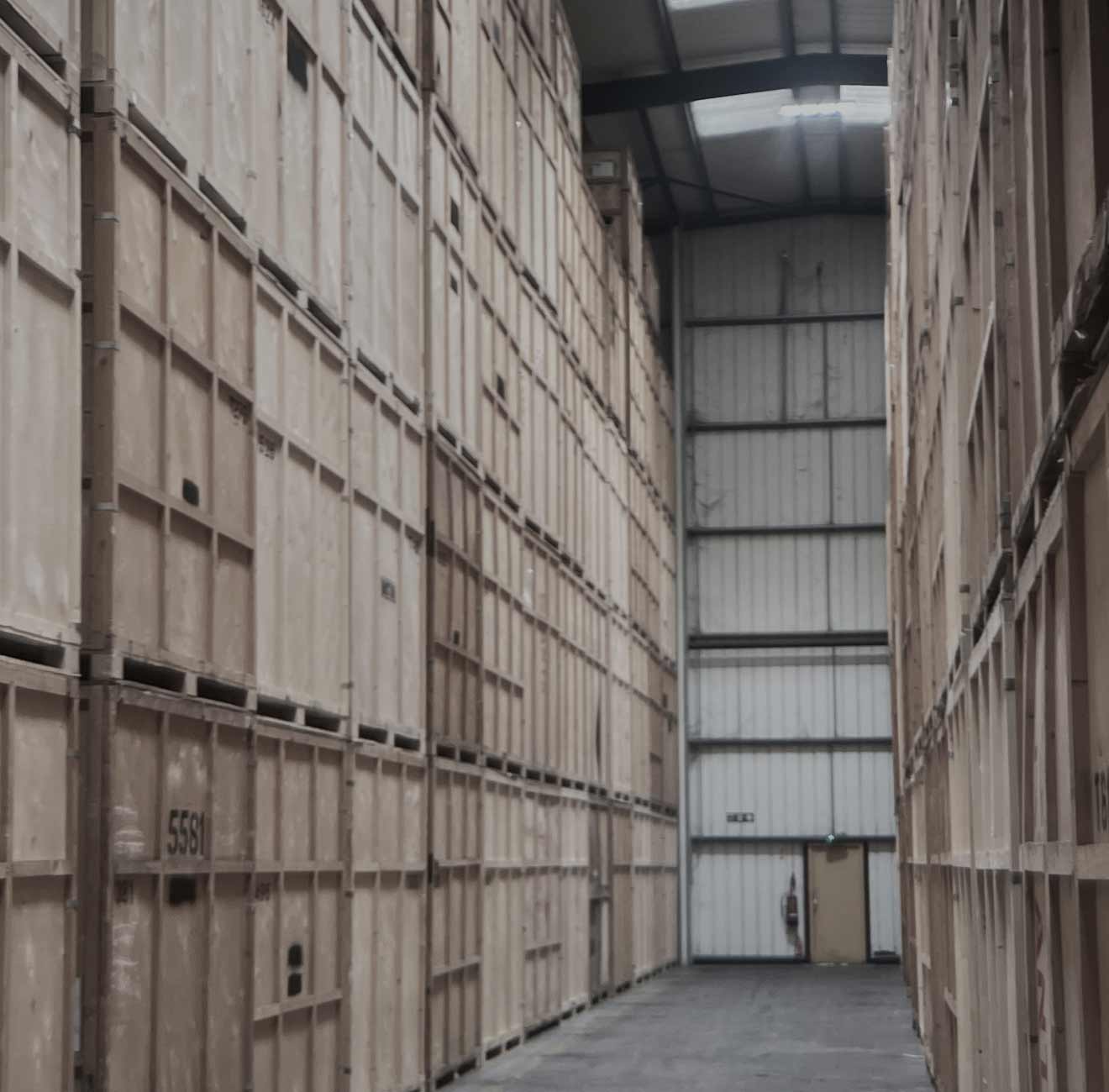
Containers are stacked in a warehouse, so access needs a few working days of notice. Packing with retrieval in mind is what makes that manageable rather than annoying. The mechanics of sizes, access and cost are in our guide to how container storage works.
Frequently asked questions
How do I prepare furniture for storage? Clean and dry it thoroughly, dismantle what comes apart, keep fittings bagged and taped to the item, and cover it with breathable material rather than sealed plastic. Never store anything damp.
Can I store a fridge or washing machine? Yes, once prepared. Defrost and dry a fridge completely and leave the door very slightly ajar if possible. Drain a washing machine including the hoses and refit the transit bolts if you have them.
Why should I not wrap furniture in plastic for storage? Sealed plastic traps moisture against the surface, which causes bloom on polished wood, mildew on fabric and rust on metal. Breathable covers let the item dry rather than sweat.
How do I stop moths damaging things in storage? Clean everything made of wool, silk, cashmere or feather before it goes in, since larvae are drawn to natural fibres and the residues on them. Use sealed containers or garment bags for valuable items and add a moth deterrent.
Can I store paint, fuel or garden chemicals? No. Flammable and hazardous items are excluded, along with anything perishable, illegal or alive. Drain fuel from mowers and strimmers before they are collected.
How should I pack a container so I can find things later? Heavy at the bottom, fragile on top, labels facing outwards, and anything you might want during the storage period loaded last so it sits near the door. Keep an inventory of what is in which container.
Talk to us
RMV Storage & Removals has stored belongings for London households and businesses for over fifteen years, with container storage collected from your door, house and office removals, packing materials and man and van work, across every area we cover including North London and North London storage.
If you would rather not prepare and pack it yourself, we can do that part too. Get in touch.
Written by Riki Migliori, Director at RMV Storage & Removals. Originally published January 2023. Fully reviewed and updated summer 2026.