
Before the vacuum: how houses were actually cleaned
The vacuum cleaner is barely a century old as a household object, and the reason it arrived when it did says a lot about Victorian London.
Until the late nineteenth century, cleaning a carpet meant taking it outside, hanging it over a line and beating it. Indoors, the tools were brooms, brushes, dustpans and damp tea leaves scattered on the floor to trap dust as it was swept. That worked well enough in a house that did not accumulate much.
Industrial London accumulated a great deal. Coal was burned for heating, cooking and industry, and the resulting soot settled on everything: curtains, upholstery, bedding, clothes. Cleaning stopped being about tidiness and became a question of health. Anyone who could afford help employed it, and the market for a better method was obvious to anyone paying attention.
The first attempts, and why they failed
The earliest suction machines were manual and impractical.
In 1869 Ives McGaffey of Chicago patented the "Whirlwind", a hand-cranked device that generated suction through a fan. You turned the crank with one hand while pushing the machine with the other, which is as awkward as it sounds. It was expensive, difficult to use, and never sold in numbers.
Others followed the same idea and ran into the same problem: a person can only generate so much suction by hand, and the person doing the cranking is the person who wanted the job made easier.
By the end of the century some machines were powered, but they worked by blowing air to dislodge dust rather than drawing it in, which mostly relocated the problem.
Puffing Billy, and a London demonstration
The breakthrough was British. In 1901 the engineer Hubert Cecil Booth watched a demonstration of a machine that blew dust off railway carriage seats and concluded that pulling air through a filter would work far better than pushing it about.
The story goes that he tested the theory by putting a handkerchief over a restaurant chair and sucking through it, then examining the ring of dirt left behind. He patented his design in August 1901.
The machine, nicknamed "Puffing Billy", was enormous. Petrol-engined, mounted on a horse-drawn cart, and far too big to enter a house. It parked in the street while long hoses were fed through windows, and it was loud enough to attract complaints. It also worked: Booth recorded two machines removing half a ton of dust from the carpets of a single West End shop in one night. In 1902 it was used to clean the coronation carpet at Westminster Abbey.
This was a service rather than a product. You did not own a Booth machine, you booked one, much as you would book a firm to clean your carpets today.
Spangler, Hoover and the machine in the cupboard
The domestic version came from an unlikely direction. James Murray Spangler was a janitor in Canton, Ohio, whose asthma was aggravated by the dust his sweeping raised. In 1907 he built himself a solution from a fan motor, a soap box, a broom handle and a pillowcase, and patented it the following year.
Spangler had the invention but not the money. He sold the patent to William Henry Hoover, a leather goods manufacturer whose saddle business was being undermined by the motor car, and who was related to Spangler by marriage. Hoover's contribution was manufacturing and selling, including the free home trial, and within a generation the brand name had become the verb.
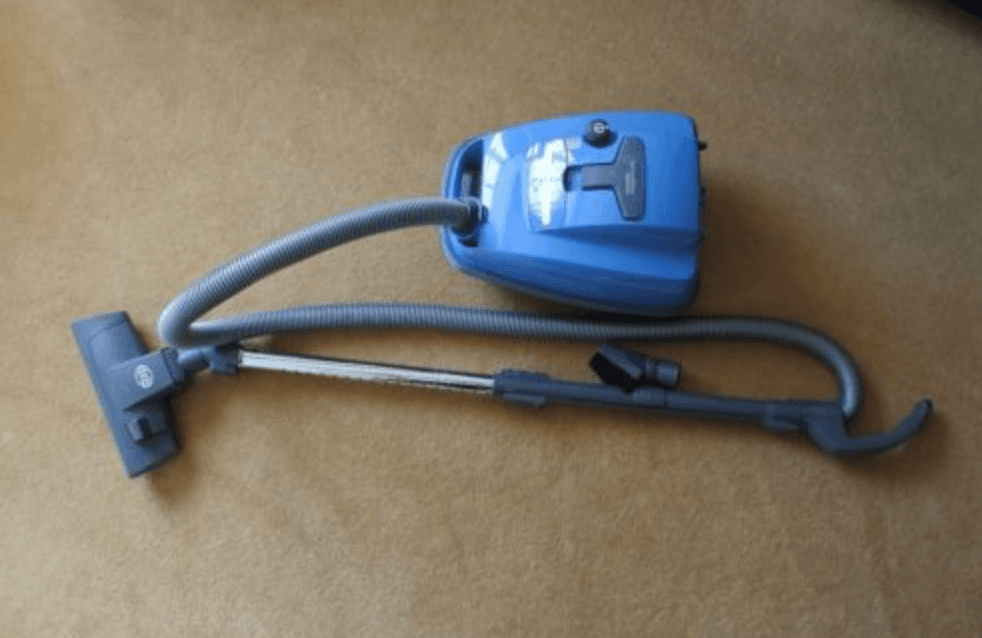
The essential design has barely changed. A motor, a fan, a filter, a brush to agitate the carpet. Bagless cyclone separation, cordless batteries and robot navigation are refinements of the same idea Spangler assembled in a shed.
Why any of this matters when you move
The reason we are interested is that cleaning is the single most contested part of leaving a property.
Data from The Deposit Protection Service shows cleaning has been the most common reason for deposit deductions for five consecutive years, accounting for around 29% of claims in 2025, ahead of damage and rent arrears. The Tenancy Deposit Scheme's adjudicators report the same pattern year after year.
Most of those disputes are not about laziness. They come from a gap between what the tenant thought was clean and what the landlord expected, with nothing documented on either side to settle it.
What actually prevents it:
- Photograph everything at check-in and again at check-out, dated, including the inside of the oven, the extractor filter, the shed and the garden.
- Clean once the property is empty. Cleaning around furniture is slower and produces a worse result.
- Know what fair wear and tear covers. Faded paint and worn carpet in a hallway are ordinary deterioration. Grease, staining and mould are not.
- Keep receipts if you pay someone, and keep the check-in inventory to compare against.
- Note that a landlord cannot generally require professional cleaning as a condition of an assured shorthold tenancy granted since the Tenant Fees Act 2019, though the property must still be returned in the condition it was let, allowing for wear and tear.
The same applies after builders have been in. Construction dust is fine enough to settle into every surface and to reappear for days, which is why an after-builders clean often needs a second visit rather than a single heroic effort.
Frequently asked questions
Who invented the vacuum cleaner? The first powered suction cleaner was patented by the British engineer Hubert Cecil Booth in 1901. The first portable electric household version was built by James Murray Spangler in 1907 and sold to William Henry Hoover, whose company made it a mass-market product.
Why is a vacuum cleaner called a Hoover? Because the Hoover Company dominated the early market through aggressive selling and free home trials, to the point where the brand name became a generic term and then a verb in British English.
What was the first vacuum cleaner like? Booth's "Puffing Billy" was petrol-powered, mounted on a horse-drawn cart and too large to enter a building. It parked in the street with hoses fed through the windows, and it was loud enough to generate complaints.
What is the most common reason for losing part of a tenancy deposit? Cleaning. It has been the leading cause of deposit deductions for five consecutive years according to The Deposit Protection Service, accounting for roughly 29% of claims in 2025.
Do I have to pay for professional cleaning at the end of a tenancy? For tenancies granted since the Tenant Fees Act 2019, a landlord generally cannot require professional cleaning as a contractual condition. The property must still be returned in the condition it was let in, allowing for fair wear and tear.
When should I clean the property I am leaving? Once it is empty, ideally the day after the removal van has gone. Cleaning around furniture takes longer and leaves the areas that matter untouched.
How we can help
RMV Storage & Removals has worked across London for over fifteen years, handling house and office removals, professional and after-builders cleaning, packing services and materials and container storage delivered to your door, across every area we cover.
For the sequence around moving day itself, see the night before and the moving house checklist, or get in touch.
Written by Riki Migliori, Director at RMV Storage & Removals. Originally published February 2015. Fully reviewed and updated summer 2026.