
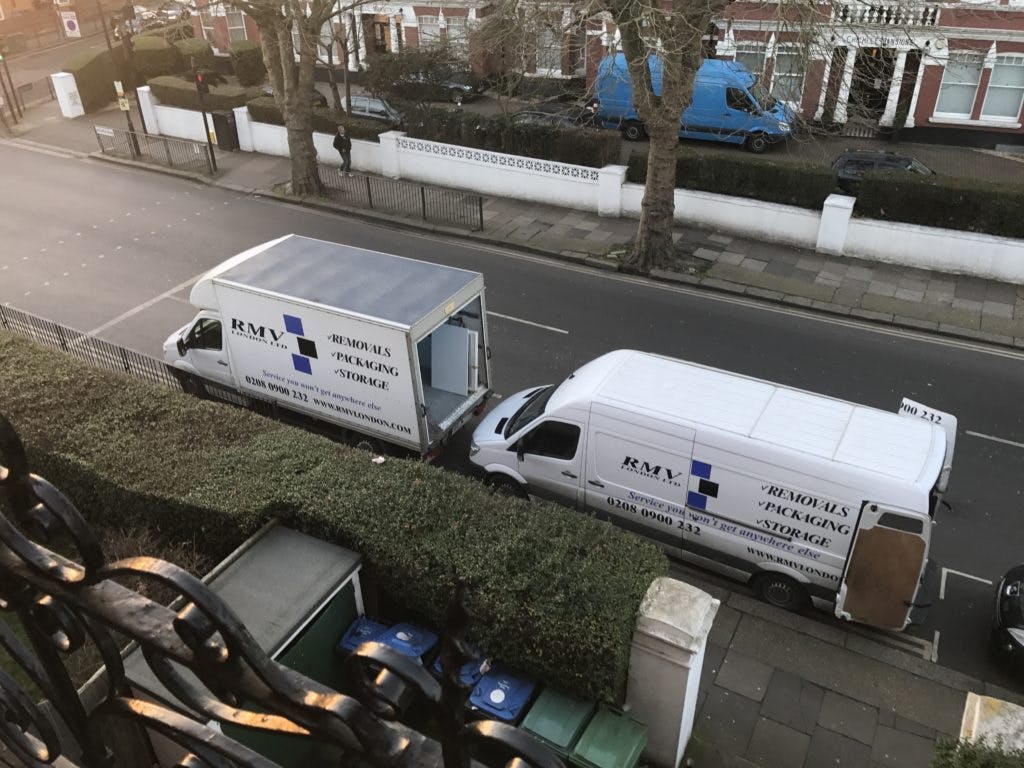
The crew arrives, and the first twenty minutes matter
A good removal is one you barely notice happening. That is not luck. It comes from a sequence that experienced crews follow every day, and knowing the sequence makes you a much easier customer to work with.
Most crews start early, commonly between eight and nine, because the day is long and completion times are not in anyone's control. The foreman will usually do three things before anything is lifted:
- Walk the property with you, room by room, confirming what is going and what is staying. Say clearly if anything is not coming.
- Check the access: stairs, doorways, the distance to the van, where it can legally park at both ends.
- Put down protection, meaning floor coverings on the routes in and out, and padding on doorframes and bannisters.
If nobody does a walk round, ask for one. It is the step that prevents the classic problems, such as the garden furniture nobody mentioned or the wardrobe that will not clear the landing.
The order things get loaded
Loading is not random. Vans are packed like a puzzle, and the order is deliberate.
Heavy, flat items go in first and low down: wardrobes, mattresses, sofas, the fridge. Boxes are stacked in tiers with the heaviest at the bottom. Fragile items and anything oddly shaped go last, on top or wedged where nothing can press on them.
This is why crews prefer boxes stacked in one place, and why a half packed house slows everything. A crew that has to hunt for the next item, or wait while you tape a box, is being paid to wait.
It is also why the answer to "can I just put a few more things in the van at the end" is often no. The load has been built to fit.
What the crew needs from you
Four things, and none of them involve lifting.
A decision maker on site. Someone who can answer questions immediately, because questions arrive constantly. If you must leave, leave a phone number that will be answered.
Clear labelling. The destination room on every box, ideally with a plan on the wall at the new property. It is the single biggest saving of time at the unloading end.
Somewhere to work. Hallways clear, pets and small children elsewhere, cars moved off the drive.
Tea, if you are so inclined. Not obligatory, always appreciated, and a kettle plus mugs is the last thing that should be packed.
The drive, and why timings slip
Between load and unload sits the part nobody can control: traffic, and in a chain, the keys.
On a purchase, keys are usually released once funds have transferred, which typically happens through the early afternoon and occasionally later. A crew may load in the morning and then genuinely have nowhere to go until the call comes. Most companies allow for a reasonable wait, then start charging.
Two things reduce the risk. Ask your solicitor to call you the moment completion happens rather than waiting for the agent. And tell your removals company early if the chain looks fragile, because a firm with warning can plan around it far more easily than one told at noon.
If the worst happens and completion fails on the day, the load can go into storage overnight or longer. Ask what that costs before you need it, not while it is happening.
At the new property
The unload is faster than the load, usually by a fair margin, and it works best if you stand somewhere central and direct.
Furniture goes in first so it can be placed properly, then boxes by room. Anything being reassembled, such as beds and wardrobes, is normally done once the room it belongs in is clear. Say if you want a bed built first, because arriving at midnight to an unassembled bed is the most avoidable misery in moving.
Before the crew leaves:
- Walk every room with the foreman, including the garage and loft if used
- Check the van is empty, which takes ten seconds and settles the question permanently
- Note anything damaged on the delivery note before signing it, and photograph it
- Check your inventory, as covered in our guide to making a removal inventory
What a bad day looks like, and how to avoid it
The pattern is consistent. The job was quoted without a survey, so the van is too small or the crew too few. Nobody arranged parking, so the carry is fifty metres. The customer is still packing at nine in the morning. Nobody knows which room anything belongs to. Completion is delayed and no one has a plan.
Every one of those is preventable a fortnight earlier. Our guides to two weeks to go and the night before cover the preparation, and what all inclusive removals actually include covers agreeing the scope so there are no surprises on the day.
Frequently asked questions
What time do removal companies arrive? Most start between eight and nine in the morning to make full use of the day. Confirm the window in advance, and be ready before it rather than at it.
How long does a house move take? A one or two bedroom flat with good access is usually a single morning. A three or four bedroom house typically fills a day. Stairs, long carries and how well packed you are all extend it.
Should I tip removal men in the UK? There is no obligation and no standard amount. Many people give something at the end of a job done well, and tea and biscuits through the day are genuinely appreciated. Neither is expected.
What happens if completion is delayed on moving day? The crew waits, usually with a reasonable allowance before waiting time is charged. If the day fails entirely, the load can normally go into storage overnight. Ask what both scenarios cost when you book.
Do I need to be there on moving day? Someone with authority to make decisions does, at both ends. If that is not you, leave a named person and a phone number that will be answered.
Can I add things to the van at the last minute? Often not. The load is built to fit the vehicle, so late additions may not have anywhere to go. Tell the crew during the walk round if anything extra is coming.
How we can help
RMV Storage & Removals has run moves across London for over fifteen years, with house and office removals, man and van work, packing services and materials and container storage delivered to your door, across every area we cover including Islington and the surrounding boroughs.
If you want to know exactly how your day would run, get in touch and we will talk it through before you book anything.
Written by Riki Migliori, Director at RMV Storage & Removals. Originally published September 2016. Fully reviewed and updated summer 2026.