
Move less, and the rest gets easier
Packing is the part of a move people most often start too late and approach in the wrong order. The good news is that it rewards method more than effort, and most of the method is decided before a single box is filled.
Start by reducing what you are moving at all. You pay to move volume, so every item that does not travel saves money twice: once on the van, once on space at the other end.
Work room by room rather than by category, and sort into four piles rather than two: keep, sell, donate, recycle. Two piles is where people stall, because "bin it" feels wasteful and "keep it" is the path of least resistance. Give yourself somewhere else to put things.
Start with the loft, the garage, the shed and the back of wardrobes. That is where the volume hides, and whatever has sat untouched since the last move will sit untouched after this one.
Get proper materials before you start
The commonest mistake is assuming a few boxes will do. What you actually need:
- Double-walled boxes in two sizes. Small for heavy things, large for light and bulky. Supermarket boxes have already carried something heavy, vary in size so they stack badly, and split at the worst possible moment.
- Packing paper, plain newsprint rather than newspaper, which transfers ink onto everything.
- Bubble wrap for anything fragile.
- Strong parcel tape, and more than you think. Buy a dispenser.
- Marker pens and labels.
- Wardrobe cartons with a hanging rail, which are the single biggest time-saver in a house with a lot of clothes.
- Mattress and sofa covers, and blankets or corner protectors for furniture.
Everything is available from our packing shop, delivered, which is easier than three trips to a hardware shop in the final week.
The techniques that actually matter
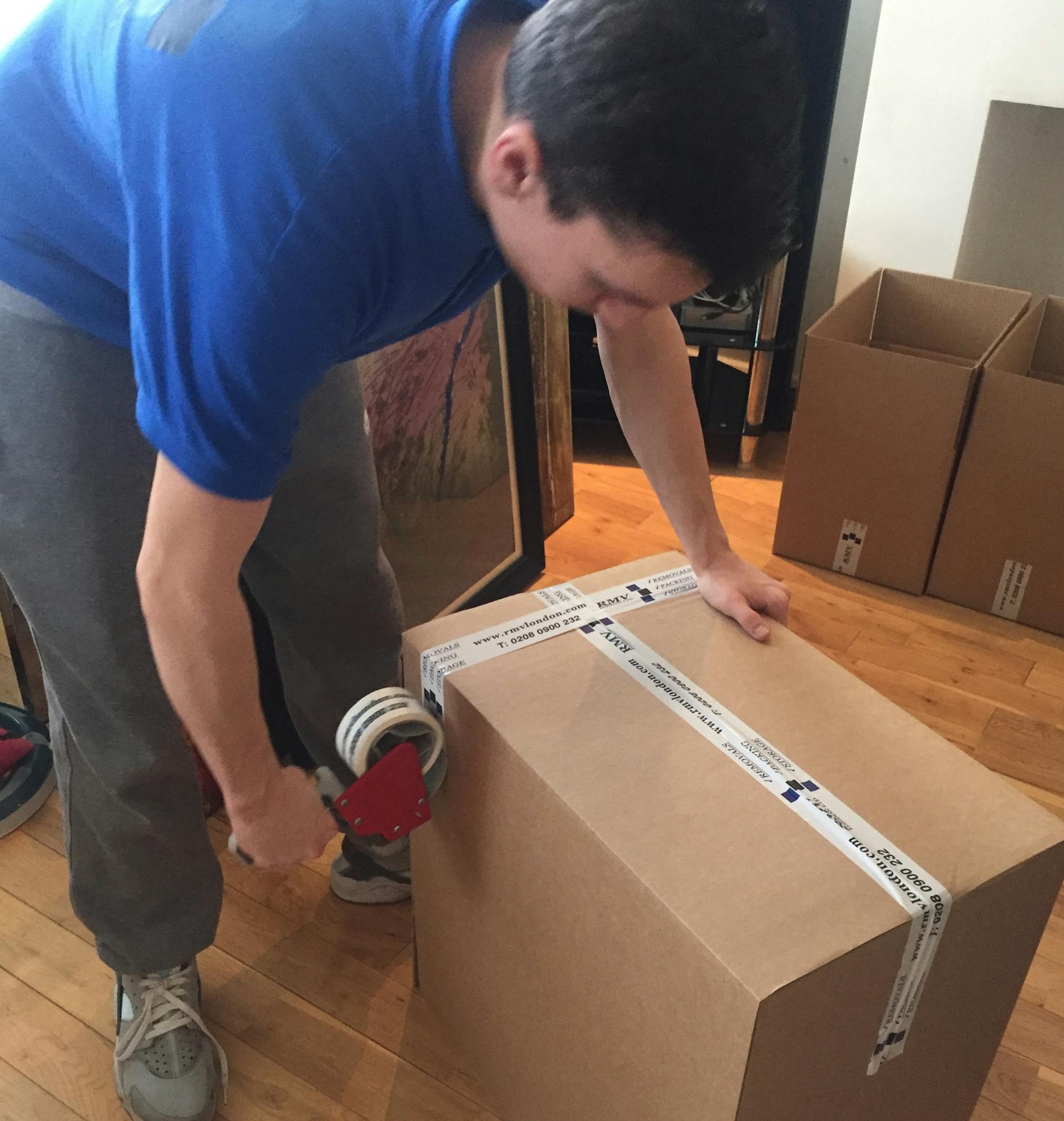
Tape the base properly. Two strips along the seam and one across each end. Boxes fail from underneath, always at the moment they are being carried down stairs.
Small boxes for heavy items. Books, tools, tins, crockery. If you cannot pick a box up comfortably yourself, it is too heavy, and a crew member should not be asked to lift what you could not.
Fill the voids. A half-empty box collapses when stacked and its contents move in transit. Towels, tea towels and bedding make good padding and have to travel anyway.
Plates on their edge, not stacked flat. Wrapped individually and stood vertically like records, plates survive far better than a flat stack, which cracks under its own weight.
Glasses and stemware individually wrapped, filled with a twist of paper, packed upright.
Clothes: hanging garments go straight into wardrobe cartons on their hangers. For everything else, rolling rather than folding saves real space, and works equally well for towels, bedding and curtains.
Photograph the back of the television and any other cabling before you unplug it. Reassembly at 11pm without that photo is a special kind of misery.
Keep hardware with its furniture. Screws, bolts and Allen keys in a labelled freezer bag, taped to the underside of the item they came from.
Label the side, not the top. Once boxes are stacked, top labels are invisible. Write two things: what is inside, and which room it goes to in the new house, not the room it came from.
Paperwork, books and the things that are heavier than they look
Paper is astonishingly heavy, and a box of books is the item most likely to hurt somebody.
Digitising old paperwork before a move is sensible, but do it with an eye on what you are legally required to keep. If you run a business, HMRC retention periods apply and some documents need to exist in original form. Our guide to an office clear-out sets out the periods and how to dispose of the rest securely.
For books, be honest about which ones you will open again. Charity shops take them, and so do many libraries. What survives the cut goes in small boxes, spines down, never more than you can lift.
What not to pack at all
Removal firms cannot carry flammables. That means paint, aerosols, gas canisters, petrol for the mower, lighter fluid and often nail varnish remover. Plants are usually excluded, and frozen or perishable food certainly is. Ask your crew for their list rather than discovering it on the morning.
Separately, some things should travel with you rather than in the van: passports and documents, jewellery, cash, medication, keys, and anything irreplaceable. Along with a first-night bag, which is covered in our guide to the night before.
When to pay someone else to do it
A full packing service is not an indulgence in three situations: when you are short of time, when the property is large, and when a significant proportion of what you own is fragile or valuable.
There is also an insurance dimension worth understanding. Goods in Transit cover frequently excludes items packed by the customer, on the reasonable basis that the firm cannot vouch for how a box was filled. If something breaks in a box you packed, you may have no claim. Ask exactly how your firm treats self-packed items before deciding.
A middle option exists: have the crew pack the kitchen and anything fragile, and do the books, clothes and linen yourself. That is often where the real value sits, since the kitchen is the slowest room in any house to pack properly.
Frequently asked questions
When should I start packing for a move? Two to three weeks before, beginning with the rooms you barely use: spare rooms, lofts, out-of-season clothes, books and decorations. Leave the kitchen and bathroom until the last few days, because you still have to live there.
What size boxes should I use? Small, double-walled boxes for heavy items such as books and crockery, larger ones for light and bulky things like bedding and cushions. If a box is too heavy for you to lift comfortably, it is too heavy full stop.
How do I pack plates so they do not break? Wrap each one individually in packing paper and stand them on edge, vertically, rather than stacking them flat. Fill any gaps so nothing can shift, and use a small box.
Is it better to roll or fold clothes when moving? Rolling saves space and works well for casual clothing, towels, bedding and curtains. Anything that creases or is worth hanging should go into a wardrobe carton on its hanger.
What can removal companies not transport? Flammable items, including paint, aerosols, gas canisters and petrol, plus plants and perishable or frozen food in most cases. Lists vary slightly between firms, so ask yours.
Does insurance cover boxes I packed myself? Often not. Goods in Transit policies commonly exclude self-packed items, since the firm cannot verify how they were filled. Check this before deciding how much to pack yourself.
How we can help
RMV Storage & Removals has packed and moved households across London for over fifteen years, with house and office removals, full or partial packing services, materials delivered to your door and container storage when the dates do not line up, across every area we cover.
For where packing sits in the wider timeline, see two weeks to go and the moving house checklist, or get in touch for a quote.
Written by Riki Migliori, Director at RMV Storage & Removals. Originally published March 2015. Fully reviewed and updated summer 2026.