
Say what you have before anyone quotes
Most household moves are boxes and flat pack. Then there is the other category: the piano, the safe, the pool table, the grandfather clock, the aquarium, the thing that came in before the extension was built and has never been out since.
These are not simply heavy. They are awkward in ways that need equipment and planning, and they are almost always priced separately from the rest of the move. The single most useful thing you can do is name them at survey stage rather than on the morning. A crew that knows about the upright piano brings the right kit. A crew that discovers it at eight in the morning has a problem, and so do you.
Pianos
The most common specialist item, and the one people most often underestimate.
An upright piano typically weighs between 150 and 300 kilograms. A grand can exceed 400. Beyond weight, the shape is unhelpful, the castors are usually decorative rather than functional, and the case is easily marked.
Uprights are moved on a piano trolley or skid, strapped upright, with the keyboard lid secured. Stairs need a minimum of two people and often four, plus stair climbing equipment.
Grands are usually partly dismantled. The lyre and pedals come off, then the legs, and the body travels on its side on a padded piano board. Reassembly is part of the job.
Two things worth knowing afterwards. Pianos go out of tune when moved, and most tuners advise letting the instrument settle in its new environment for a few weeks before tuning, so it has acclimatised to the humidity and temperature of the room. And if a piano is going into storage, ask about conditions, because pianos dislike damp and dislike swings in temperature more than they dislike being moved.
Safes
Weight is the whole problem. Domestic safes start around 50 kilograms and commercial ones run into the hundreds or thousands.
Practical considerations: whether the floor at both ends can take the point load, whether it is bolted down and who is removing the fixings, and whether stairs are involved at all. Anything substantial needs specialist lifting equipment, and some jobs need a crane or a hoist rather than a staircase.
Empty it first, and move the contents yourself.
Pool and snooker tables
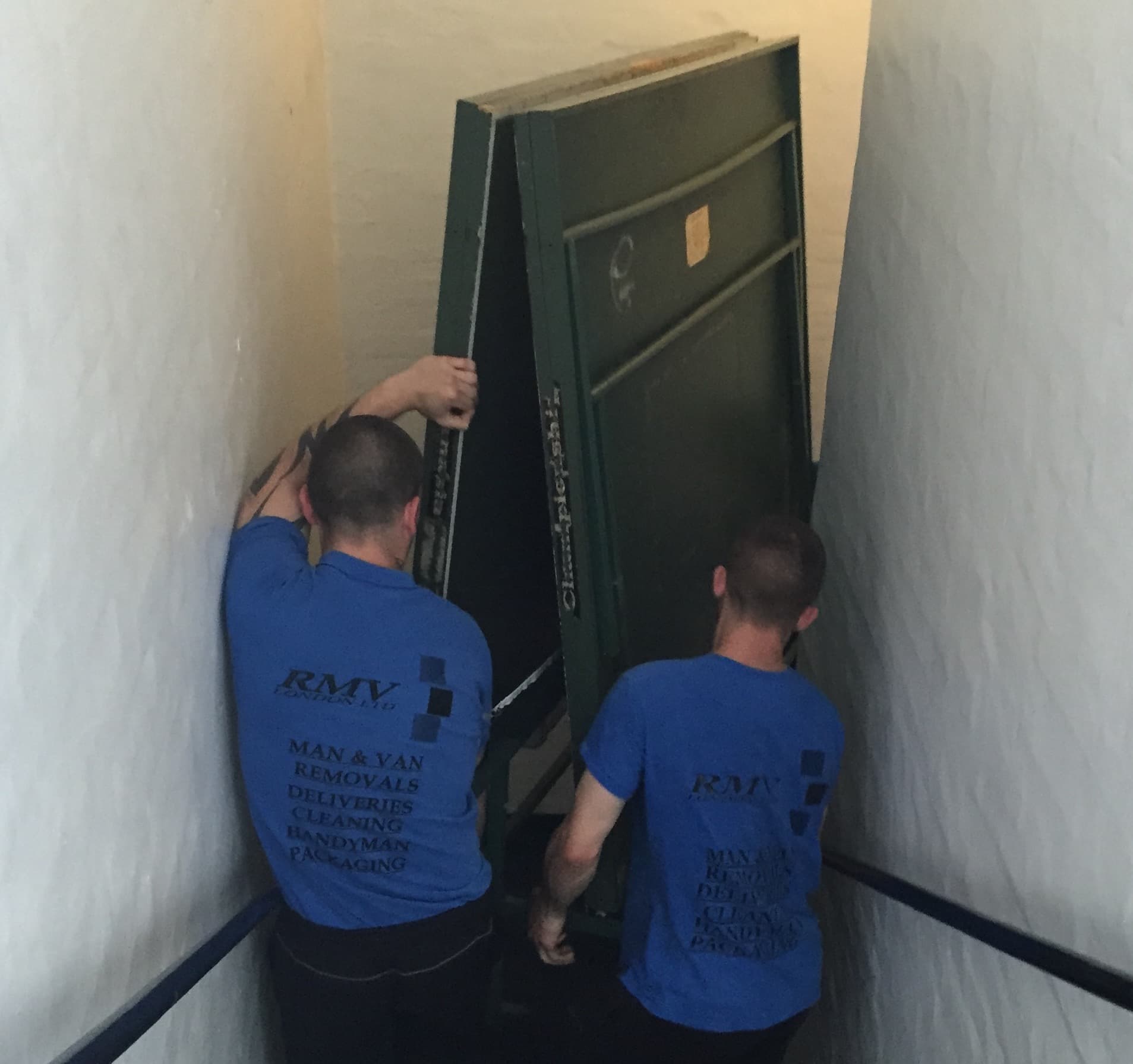
These are not moved. They are dismantled, transported and rebuilt.
The slate bed comes in sections weighing 60 kilograms or more each, and it must be lifted rather than dragged. Reassembly involves relevelling the slate, which is a skilled job and the reason a badly reinstalled table never plays right. Treat it as a trade rather than a lift, and budget for the rebuild.
Grandfather clocks and antique furniture
Clocks need the pendulum and weights removed and the movement secured before travel. Left in place, the movement is damaged by the swinging. The case travels upright, padded, and the parts travel separately and labelled.
Antiques are usually more fragile than they look. Old glue joints, veneer that lifts, marquetry that reacts to humidity. Blankets are not always enough, and valuable pieces may need bespoke crating rather than wrapping. Marble tops travel vertically, on edge, never flat.
Artwork, mirrors and chandeliers
Artwork travels in picture boxes with corner protectors, face protected with acid free tissue, never wrapped directly in bubble wrap, which can mark a surface in warm conditions.
Mirrors and glass go on edge, vertically, in purpose made boxes. Flat is how glass breaks.
Chandeliers are usually taken down by an electrician, then dismantled into components, with every arm and drop wrapped separately and boxed. Photograph the assembled fitting first, because rebuilding one from memory is miserable.
Aquariums, gym equipment and motorbikes
Aquariums must be completely empty. No water, no gravel, no ornaments. A tank full of water can weigh over a tonne, and even a partly filled tank flexes and stresses the seams and sealant. Fish travel separately in bagged water, and the tank should be treated as a large fragile item.
Gym equipment. Treadmills usually have transit bolts or a folding lock. Multi gyms come apart. Free weights should never be left in a box designed for books.
Motorbikes need proper tie down points and a ramp, and fuel is a flammable material that most removal insurance excludes, so the tank normally needs to be drained or nearly empty. Ask before assuming.
When it will not fit through the door
Sometimes the item is fine and the building is the problem. Sofas that came in before a wall was built. Wardrobes assembled in the room. Grand pianos on the third floor of a Victorian conversion.
Three options, in ascending order of cost:
- Dismantle it. Often possible with furniture, sometimes not with older pieces where the joints are glued rather than bolted.
- Hoist it through a window or balcony. A recognised method with the right equipment, though it needs space outside, permission, and safe access. On a listed building or in a conservation area, any alteration to help access needs consent.
- Accept it stays. Occasionally the honest answer, and much better established a fortnight before the move than on the day.
Measure early: doorways, stair widths, the turn at the top, ceiling heights and lift dimensions. Our guide to large and complex house moves covers the wider planning.
Insurance, which matters more here
Standard Goods in Transit cover carries per item limits, and high value pieces normally need to be declared in advance and specifically covered. A piano, a painting or an antique may exceed the standard limit on its own.
Get valuations for anything significant, photograph it before it moves, and confirm in writing what is covered and to what value. Our guides to making a removal inventory and what all inclusive removals actually include cover the questions to ask.
Frequently asked questions
How much does it cost to move a piano? It is quoted separately from the rest of a move and depends on the type, the access at both ends and whether stairs or a hoist are involved. An upright on the ground floor is a different job from a grand on a second floor with no lift.
Do I need to retune a piano after moving it? Yes, and most tuners advise waiting a few weeks so the instrument settles into the humidity and temperature of its new room before tuning.
Can removal companies move a safe? Many can with the right equipment, and some subcontract to specialists. Weight, floor loading and stairs decide the method. Empty the safe and move the contents yourself.
How do you move a fish tank? Completely empty. Remove all water, gravel and ornaments, transport fish separately in bagged water, and treat the tank as a large fragile item. Water weight will stress the seams of even a partly filled tank.
What happens if furniture will not fit through the door? It is dismantled, hoisted through a window or balcony where that is safe and permitted, or left behind. Measure doorways, stairs and lifts well before moving day so the decision is not made on the morning.
Are valuable items covered by removals insurance? Only to the policy limits, and high value pieces usually need declaring in advance. Get valuations, photograph everything, and confirm the cover in writing before the move.
Talk to us
RMV Storage & Removals has moved pianos, antiques, safes and a fair number of genuinely odd objects across London for over fifteen years, with house and office removals, packing services and materials and container storage delivered to your door, across every area we cover.
If you have something unusual, tell us what it is, where it sits and what is between it and the street. Get in touch and we will tell you honestly what it needs.
Written by Riki Migliori, Director at RMV Storage & Removals. Originally published January 2017. Fully reviewed and updated summer 2026.